Lampblack
Composition and Properties of Lampblack
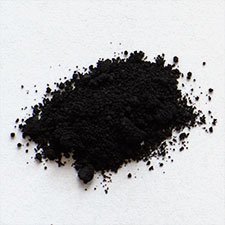
Lampblack is soot produced by burning oil or other combustible organic materials. Soot is basically pure carbon, sometimes containing small amounts of unburned material or other combustion products.The pigment is very stable as are all carbon blacks, it is absolutely lightfast and compatible with all other pigments.
Names
SootPBk 7, CI 77266From Old French lampe “lamp, lights” (12c.), from Latin lampas “a light, torch, flambeau,” from Greek lampas “a torch, oil-lamp, beacon-light, light,” from lampein “to shine,” perhaps from a nasalized form of Proto-Indo-European root *lehp– “to light, glow” From Online Etymology Dictionary
Preparation
Lampblack is soot which can be produced by burning oil in a lamp. Soot can also be produced by burning of a multitude of other fuels such as gas, fats, asphalt, paraffin, and resins. Soot produced industrially from gas or oil is called carbon black, however, carbon black had also been used synonymously with lamp black.
History of Use
Lampblack had been in use since prehistoric times and is one of the oldest pigments.
Quote
He walked out into the road and stood. The silence. The salitter drying from the earth. The mudstained shapes of floating cities burned to the waterline. At a crossroads a ground set with dolmen stones where the spoken bones of oracles lay moldering. No sound but the wind. What will you say? A living man spoke these lines? He sharpened a quill with his small penknife to scribe these things in sloe or lampblack? At some reckonable and entabled moment? He is coming to steal my eyes. To seal my mouth with dirt. p. 220
Source: The Road
Dyeing was carried to great perfection. Many vegetable and animal coloring matters were known. Mordants were used, and the effects produced were very beautiful. Paints were also prepared, and applied with brushes. The following mineral colors were known at the time of Pliny : white lead, cinnabar, litharge, smalt, verdigris, ochre, lampblack, realgar, orpiment, and stibnite.
Source: A Short History of Chemistry